
The air at the Uukwambi Royal Palace grounds in northern Namibia was thick with pride, tradition and purpose, as thousands recently gathered for the country’s 16th annual Marula Festival, also known as Oshituthi Shomagongo.
Held at Onamega under the Uukwambi Traditional Authority, this year’s celebration carried the theme “Celebrating Our Culture and Heritage: Roots of Our Unity, Seeds for Our Future.” The festival transformed the quiet rural landscape into a dazzling tribute to the marula fruit and the culture it continues to sustain.
But long before the dancing and speeches began, the women had already done the real work.
Weeks ahead of the festival, communities were encouraged to deliver marula juice to the palace to ensure an abundant supply for the celebrations. And abundant it was!
To open the event, a convoy of women adorned in traditional Oshiwambo attire walked gracefully across the grounds, each balancing a clay pot filled with omagongo (a seasonal drink made from fermented marula juice) on their heads. The procession was a striking and symbolic, honouring generations of women whose labour and knowledge have kept the tradition alive for centuries.
Traditionally, women collect the fruit, extract the juice, and oversee the fermentation process while passing knowledge and skills down to younger generations.
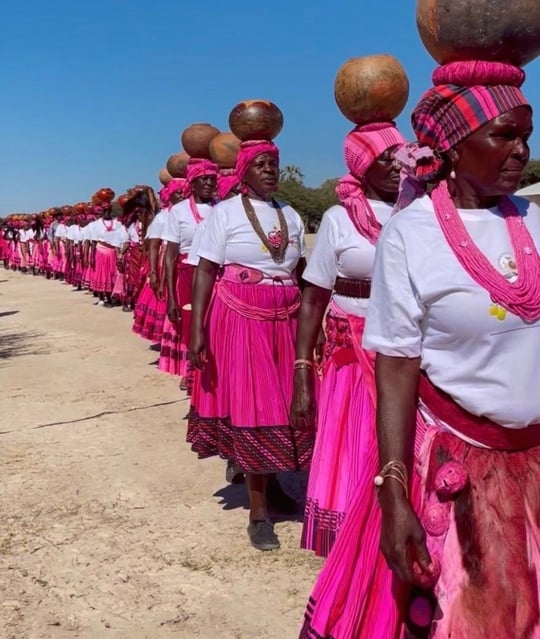 Procession of Owambo women balancing a clay pot filled with
omagongo (marula juice) on their heads.
The Marvel of Marula
The marula fruit itself is remarkably versatile. From juices and traditional beverages to cosmetics and cooking oils, nearly every part of the fruit is used. The prized ondjove (marula oil extracted from the nuts) is valued both as a cooking ingredient and a traditional beauty treatment. Fruit peels can be used as mosquito repellent, while leftover shells and skins are repurposed as livestock feed, fertiliser, or firewood, reflecting generations of sustainable indigenous knowledge.
The festival’s international significance was cemented in 2015 when UNESCO recognised the Omagongo Festival as Namibia’s first cultural tradition to be inscribed on the Representative List of the Intangible Cultural Heritage of Humanity. The recognition acknowledged its role in preserving indigenous knowledge systems, oral history, cultural identity, and social cohesion.
Omagongo season is also regarded as sacred and deeply peaceful. Tradition dictates that no weapons may be carried during this time, and even traditional courts suspend their activities. The result is an atmosphere of rare harmony, where communities come together not only to drink omagongo, but also to exchange stories, recite poetry, sing traditional songs, and discuss family and community matters.
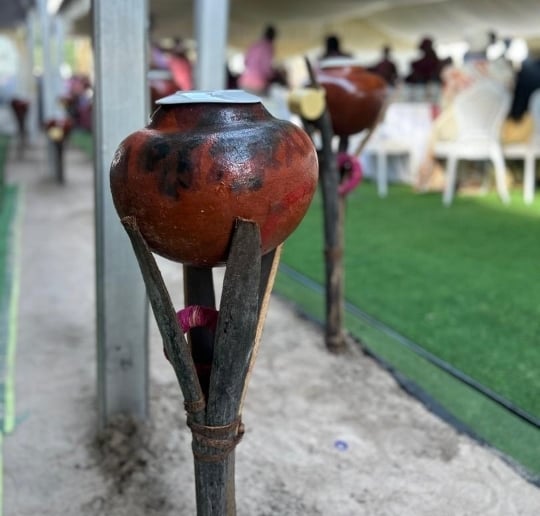
Traditional clay pot in which marula juice (omagongo) is served
A Celebration of Unity and Heritage
This year’s Omagongo festival brought together traditional authorities, political leaders, tourism stakeholders, researchers, and international guests. Among them were princesses from Lesotho and Eswatini, where marula trees also hold cultural and economic importance. Their presence highlighted growing regional interest in the marula tree and its expanding use in wellness and cosmetic industries across southern Africa.
Chief Herman Iipumbu, speaking on behalf of the eight Aawambo traditional authorities, opened proceedings with a minute of silence in honour of Sam Nujoma, who played a central role in transforming Omagongo into a unified national celebration in 2001. Until his passing last year, Nujoma served as patron of the festival and championed culture as a cornerstone of national unity and identity.
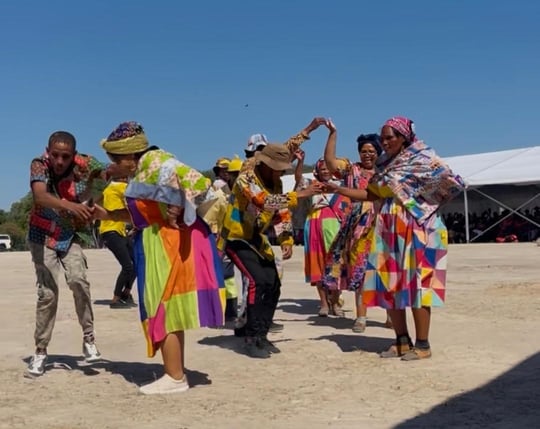 This year's Marula Festival saw a spectacular number of performances
from diverse cultures across Namibia
Tradition as Economic Power
Namibia’s President, Netumbo Nandi-Ndaitwah, used the occasion to reaffirm government support for preserving indigenous knowledge systems while unlocking their economic potential. During her keynote address, she described the festival as both a celebration of tradition and a platform for development.
She encouraged universities, research centres, women, young people, and the private sector to work together in documenting and promoting indigenous knowledge systems, particularly those linked to the marula tree and traditional food systems. She also highlighted the marula fruit’s nutritional, cosmetic, cultural, and economic value, noting its potential to contribute to job creation and economic diversification.
Furthermore, Namibia's Ministry of Environment, Forestry and Tourism donated wildlife meat for the communal feast, including two elephants and giraffes, further emphasising the connection between culture, land, and sustenance. Marula trees were also planted at the palace during the celebrations.
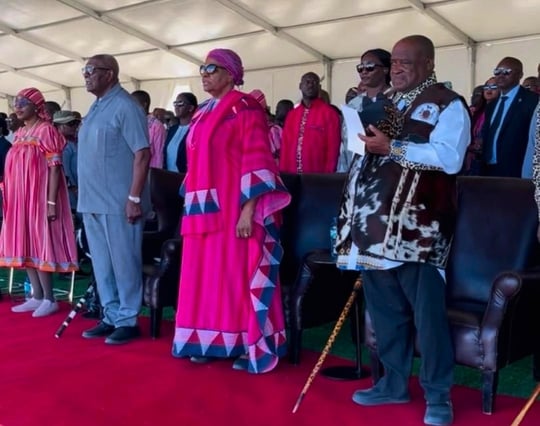
Namibia’s President, Netumbo Nandi-Ndaitwah next to Uukwambi Chief Herman Iipumbu
at the 2026 Marula festival
Wildlife, Plantings, and a Growing Vision
The festival also carried a vision for the future. Leaders announced plans to identify additional regions across Namibia where marula trees grow, with the aim of expanding future celebrations and including more communities in the cultural movement. Next year’s festival will be hosted by the Uukwaluudhi Traditional Authority.
As the sun set over Onamega Village and traditional songs echoed across the royal grounds, the message of the festival remained unmistakable: heritage has the power to unite communities, strengthen identity, create opportunity, and connect generations - all through the humble fruit of the marula tree.
Celebrate Namibia’s living traditions in comfort and style at Etosha King Nehale. This thoughtfully curated lodge offers an elegant gateway into Oshiwambo culture and local cuisine.

SUBMIT YOUR COMMENT