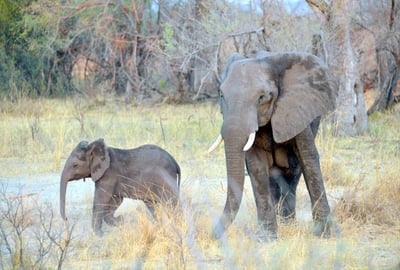
African Elephant
Elephants regularly move through the woodlands and river systems of the Zambezi Region. Along the Kwando, they may appear at the water’s edge to drink, feed, cross channels or cool themselves in the river.
Read more
Set in Namibia’s lush Zambezi Region, near Namushasha River Lodge and the wildlife-rich Bwabwata National Park, the Kwando River is a lifeline for animals, birds and people. Here, the movement of water shapes everything—from the daily routines of hippos and crocodiles to the seasonal visits of elephants, buffalo and antelope.
This is a place of constant change. River levels rise and fall with the seasons, bird calls carry across the water, and wildlife may appear quietly between reeds or arrive in herds along the riverbank. As this camera is located in a remote natural environment, occasional interruptions may occur.
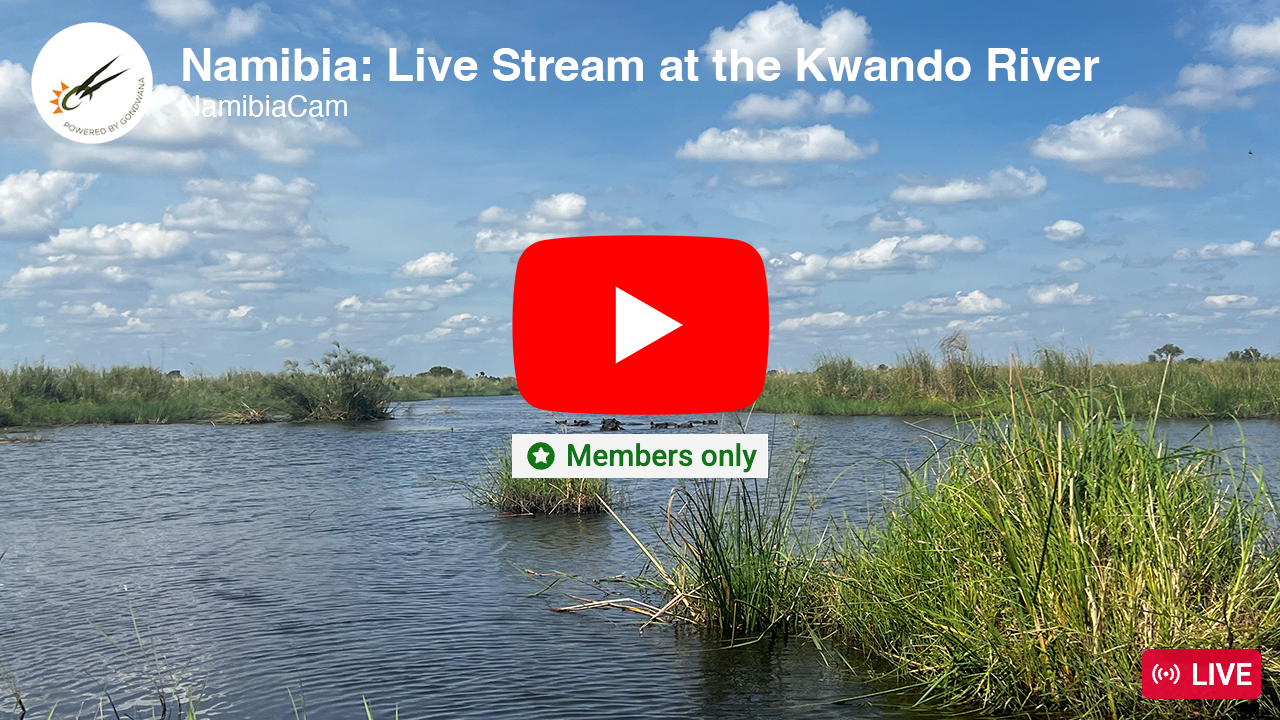
The Kwando River forms part of a living water system in north-eastern Namibia. Unlike the open desert waterholes, this landscape is defined by permanent water, floodplains, woodland and dense river vegetation. Visitors may encounter:
Elephants regularly move through the woodlands and river systems of the Zambezi Region. Along the Kwando, they may appear at the water’s edge to drink, feed, cross channels or cool themselves in the river.
Read more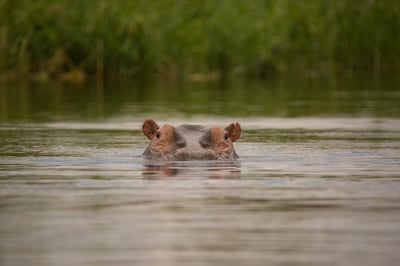
Hippos spend much of the day in the water, surfacing to breathe, yawn, grunt and keep cool. At night, they leave the river to graze along the banks, often returning to the same pathways.
Read more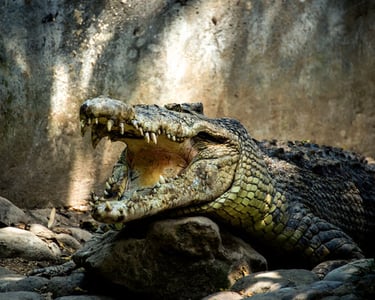
A powerful river predator, the Nile crocodile is often seen resting on riverbanks or floating almost motionless in the water. Around the Kwando, crocodiles form part of the river’s natural balance.
Read more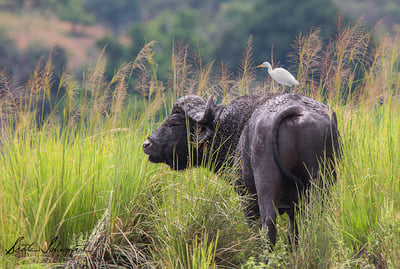
Buffalo are strongly associated with water and grazing areas. In the Zambezi Region and Bwabwata National Park, they are among the large mammals that may be seen in herds near floodplains and riverine grasslands.
Read more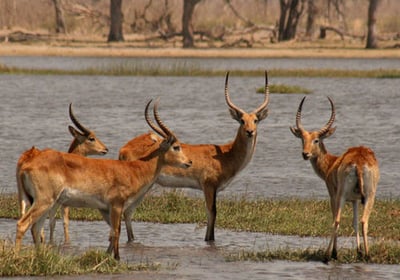
The red lechwe is a wetland antelope perfectly suited to floodplains and marshy areas. Its long legs help it move through shallow water, making the Kwando River environment an ideal habitat.
Read more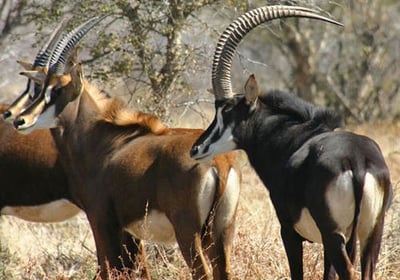
Recognised by their striking dark coats and elegant curved horns, sable antelope are among the special antelope species associated with Bwabwata National Park and the surrounding woodland habitats.
Read more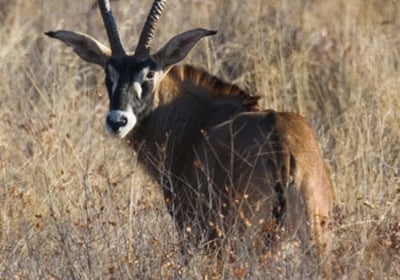
The roan antelope is one of Africa’s largest antelope species. With its distinctive facial markings and strong build, it is a memorable sight in the wooded savanna and open areas near the river.
Read more.jpg?width=400&height=300&name=7%20African%20Fish%20Eagle%20(2).jpg)
Few sounds capture the spirit of Namibia’s northern rivers quite like the call of the African fish eagle. Often seen perched in tall riverside trees, this bird is one of the Kwando’s most iconic residents.
Read more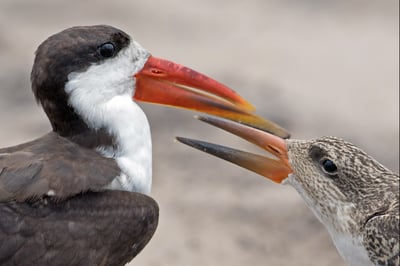
Seasonal and special, the African skimmer is a remarkable river bird known for flying low over the water with its lower bill cutting the surface as it feeds. Sightings depend on season and river conditions.
Read more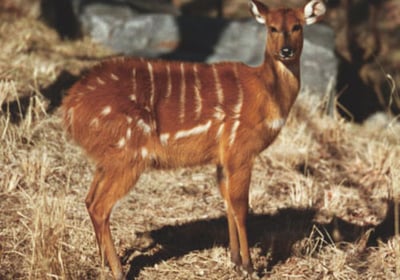
The sitatunga is a shy, water-loving antelope adapted to swampy areas and dense vegetation. It is not always easy to spot, but the Kwando River system provides the kind of habitat where this elusive species may occur.
Read moreAt the edge of the Kwando River, the Zambezi Region reveals a side of Namibia shaped by water, wildlife and deep green stillness. Here, mornings begin with birdsong, afternoons drift into river cruises, and evenings end in the glow of a red sunset reflected on the water.
Stay at Namushasha River Lodge, where river views, thatched spaces and guided activities create a relaxed base for exploring the area. For a more private experience,Namushasha River Villa offers secluded luxury on a quiet channel of the Kwando River. Travellers looking for a closer-to-nature stay can choose Namushasha River Camping2Go or Namushasha River Campsite, both offering easy access to lodge facilities, river activities and excursions into Bwabwata National Park.
From boat cruises and fishing excursions to guided game drives, Namushasha is an ideal gateway into Namibia’s water-rich north-east.
%20new.jpg?width=800&height=533&name=Namushasha%20River%20Lodge%20(2)%20new.jpg)
.jpg?width=800&height=533&name=Namushasha%20River%20Villa%20(3).jpg)
.jpg?width=800&height=533&name=Namushasha%20River%20Camping2Go%20(7).jpg)
.jpg?width=800&height=533&name=Namushasha%20River%20Campsite%20(5).jpg)
%20web.jpg?width=600&height=400&name=Go%20Fishing%20-%20Kwando%20River%20(4)%20web.jpg)
The Kwando River is one of Namibia’s most atmospheric river landscapes. Its channels, floodplains, reeds and water lilies support an abundance of life, from hippos and crocodiles to elephants, buffalo and countless waterbirds. Here, the experience is never static—the river changes with the season, the light and the movement of wildlife.
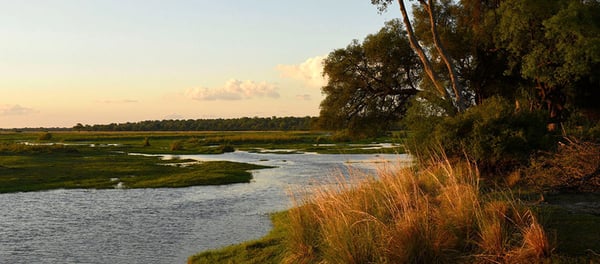
Bwabwata National Park lies between the Okavango River in the west and the Kwando River in the east. It is one of Namibia’s most unique conservation landscapes, where wildlife, communities and tourism share the same broader environment. The park is known for elephants, buffalo, sable and roan antelope, predators and exceptional birdlife.
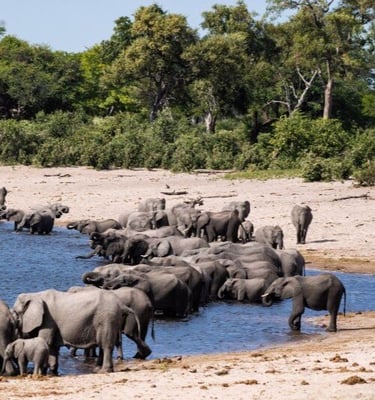
The Kwando River area highlights the importance of protecting Namibia’s northern water systems. Responsible tourism supports conservation, creates employment and helps maintain a long-term balance between people, wildlife and the natural environment. In this region, conservation is not separate from daily life—it is part of how the landscape is experienced, protected and shared.
The camera overlooks the Kwando River in Namibia’s Zambezi Region, near Namushasha River Lodge and the Bwabwata National Park area.
Yes. The Kwando River is a natural river system and one of the key waterways of north-eastern Namibia. Its channels, floodplains and riverbanks provide important habitat for wildlife and birds.
Wildlife in the area may include hippos, crocodiles, elephants, buffalo, red lechwe, sable antelope, roan antelope, sitatunga, impala, warthog, baboons, vervet monkeys and many bird species.
Predators associated with the broader Bwabwata and Kwando River area include lion, leopard, cheetah, spotted hyena and African wild dog. Sightings depend on movement, season and habitat.
The Kwando River is influenced by seasonal rainfall and upstream water movement. Water levels may rise and fall throughout the year, which can affect river channels, boat access and where wildlife is most visible.
Early mornings and late afternoons are often rewarding, as animals and birds tend to be more active during cooler parts of the day. Night-time viewing may also reveal hippos, nocturnal calls and movement along the riverbank.
The Kwando River supports wetland, woodland and floodplain habitats, making it an excellent environment for birdlife. Viewers may see fish eagles, kingfishers, herons, storks, bee-eaters, jacanas and seasonal river birds.
Yes. Hippos and crocodiles are wild animals and should always be treated with caution. Visitors should never swim in the river and should follow all lodge and guide instructions when near the water.
Yes. Travellers can stay at Namushasha River Lodge, Namushasha River Villa, Namushasha River Camping2Go or Namushasha River Campsite and join guided activities such as boat cruises, fishing excursions and Bwabwata National Park game drives.
Yes, guided fishing activities are available in the area, depending on season and water levels. Fishing is conducted on a catch-and-release basis.

We are unique. We are passionate. We are Namibian. Most importantly, we are Gondwana.
Do you love tuning in to the Namibia Cam live streams? Become a Namibia Cam member and help preserve both the streams and Namibia’s wildlife starting from just €0.99 per month.
*Membership is applicable to YouTube approved countries only.