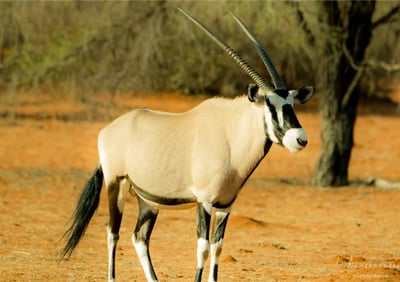
Gemsbok (Oryx gazella)
The largest of the three oryx species, with a distinctive light brown/grey coat and black leg markings.
Learn more
NamibiaCam's Kalahari Desert waterhole is set in the heart of the Gondwana Kalahari Park in southern Namibia, just 33 km from Mariental and 34 km from Stampriet, near Kalahari Anib Lodge.
Here, the Kalahari unfolds in pure, untamed beauty. Golden grasses shimmer against burnt-orange dunes, dark green acacias punctuate the horizon, and an endless blue sky stretches beyond imagination. As the sun dips low, the desert ignites in a breathtaking display of fiery reds, deep purples, and glowing ambers.
While the Kalahari Desert is a semi-arid environment with limited and unpredictable rainfall, many animals have successfully adapted to survive and thrive in these challenging conditions.
The largest of the three oryx species, with a distinctive light brown/grey coat and black leg markings.
Learn more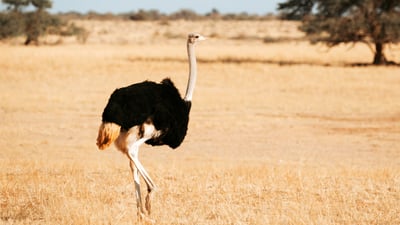
At 2.7 metres tall, the flightless ostrich is the largest bird in the world, found across Africa's savannahs and deserts.
Read more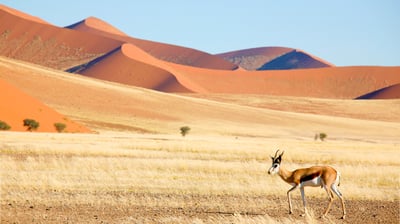
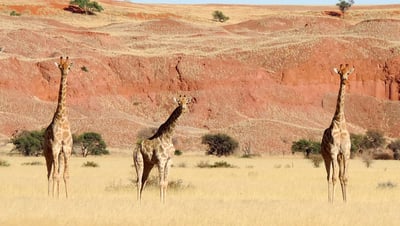
The world's tallest animal, standing up to 6 metres, is an unmistakable presence across the Kalahari.
Read more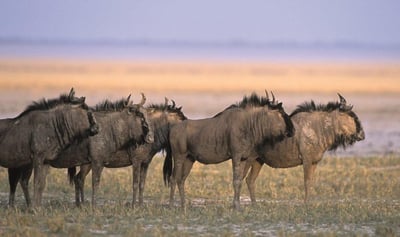
Standing 1.4 m at the shoulder and weighing up to 200 kg, both sexes carry distinctive curving horns.
Read more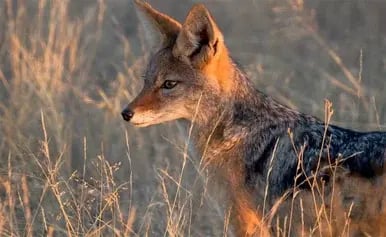
A medium-sized, dog-like predator known for its distinctive two-toned coat.
Read more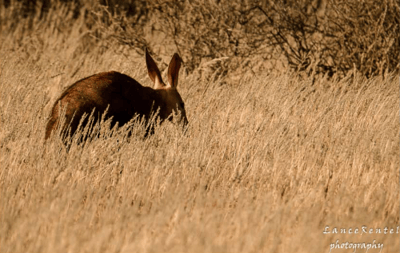
A burrowing insectivore that feeds on ants and termites, capable of digging to safety in mere minutes.
Read more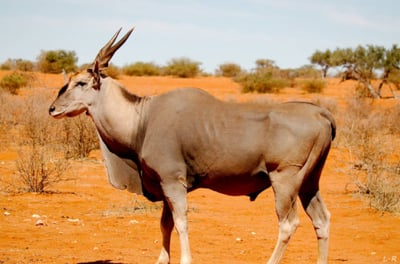
Africa's largest antelope, both sexes bearing heavy spirally twisted horns up to 1 m in length.
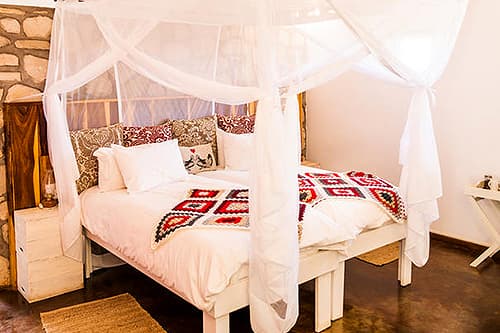
Read moreExperience the beauty of the Kalahari on a sunset drive at Kalahari Anib Lodge in the Gondwana Kalahari Park, or indulge in the luxury of the Reverie for an unforgettable desert escape. For a more adventurous stay, Kalahari Anib Camping2Go offers fully equipped safari tents, while Kalahari Anib Campsite provides traditional shaded pitches under the vast desert sky.
Just a few kilometres away, the Kalahari Farmhouse creates a serene oasis where artesian water nurtures a lush secret garden, and its adjacent Kalahari Farmhouse Camping offers a peaceful, shaded base for travellers seeking a closer connection to nature.
.jpg?width=800&height=533&name=Kalahari%20Anib%20Lodge%20(5).jpg)
.jpg?width=800&height=533&name=2000x1333q70Kalahari-Anib-Camping2Go-3(1).jpg)
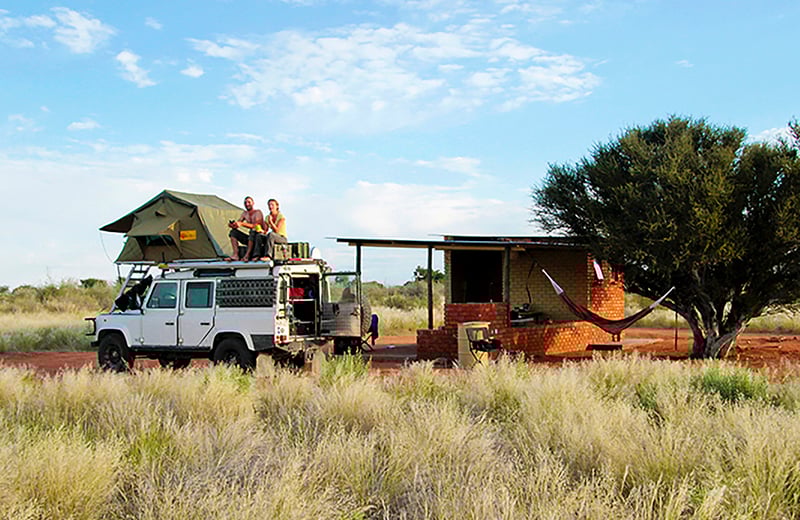

In 1937, German prince Friedrich Hermann zu Solms-Baruth purchased farm Dabib, almost 50,000 ha (500 km²) laying the foundation for what is now a protected natural haven.
Read more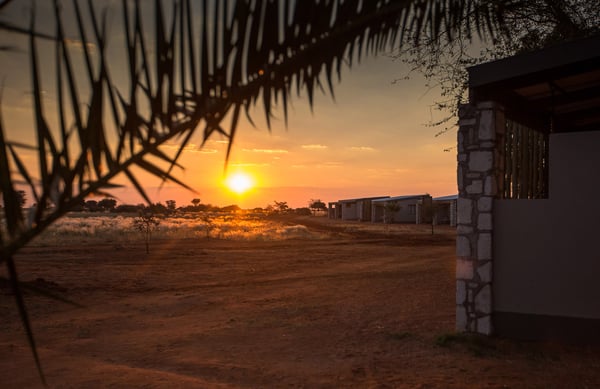
The Gondwana Collection protects sensitive desert ecosystems, funds nature conservation through responsible hospitality, and creates employment for Namibians all facilities feature solar power, water-recycling plants, and responsible waste management.
Read more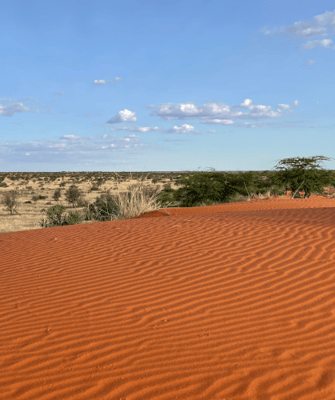
Covering roughly 1.6 million square kilometres, the Kalahari is the largest continuous stretch of sand on Earth, spanning south-eastern Angola across Namibia and Botswana to northern South Africa.
NamibiaCam's Kalahari Desert waterhole lies within the Gondwana Kalahari Park in the southern part of Namibia, close to Kalahari Anib Lodge 33 km from Mariental, 34 km from Stampriet, and 281 km from Windhoek.
Animals seen at the waterhole include:
Eland, Greater Kudu, Gemsbok, Angolan Giraffe, Blue Wildebeest, Springbok, Ostrich, Burchell's Zebra, Common Warthog, Steenbok, Common Duiker, Cape Hare, Springhare, Honey Badger, Striped Polecat, Cape Porcupine, Meerkat, Ground Squirrel, Yellow Mongoose, Slender Mongoose, African Wild Cat, Black-backed Jackal, Bat-eared Fox, Cape Fox, Small Spotted Genet, Leopard, Aardvark, and Aardwolf.
Sightings include: Caracal, African Wild Cat, Black-backed Jackal, Bat-eared Fox, Cape Fox, Small Spotted Genet, Aardwolf, and Leopard.
Also found in this area of the Kalahari: Kalahari Tent Tortoise, Leopard Tortoise, Damaraland Mole-rat, Acacia Rat, Four-striped Grass Mouse, and Desert Pygmy Mouse.
The animals are licking a salt block placed by park rangers. Salt blocks supply essential minerals calcium, magnesium, sodium, and zinc that herbivores need to supplement their diets.
These animals are not found in this area of Namibia. They do, however, occur in the northern parts of the country.
Look no further than the Gondwana Travel Centre. We specialise in finding the perfect options tailored to your Namibian adventure letting you focus on enjoying every moment. Get in touch today to start planning your dream getaway!
Send your request to: adminnamcam@gcnam.com

We are unique. We are passionate. We are Namibian. Most importantly, we are Gondwana.
Do you love tuning in to the Namibia Cam live streams? Become a Namibia Cam member and help preserve both the streams and Namibia’s wildlife starting from just €0.99 per month.
*Membership is applicable to YouTube approved countries only.